
Author: Seth Thomas – 3 min read
When stress keeps the nervous system on high alert, sleep suffers—and so does sexual performance. Elevated cortisol interferes with arousal, blood flow, and recovery, creating a cycle that’s hard to break without addressing rest.
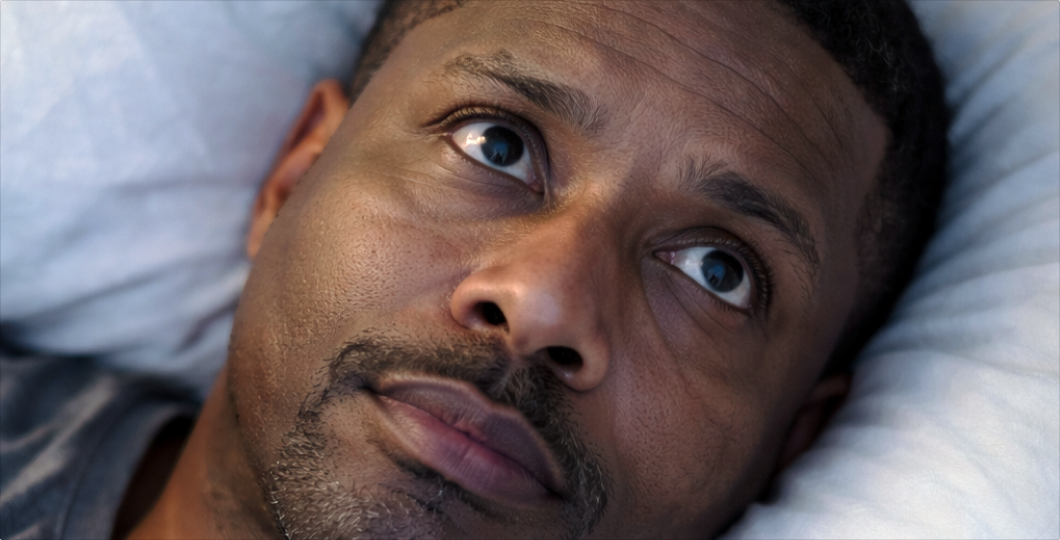
Stress doesn’t always feel dramatic. Sometimes it looks like lying awake when you’re exhausted, waking up tense, or feeling “on edge” even when nothing is obviously wrong. For many men, that constant background stress shows up quietly—first in sleep, then in intimacy.
When erections become inconsistent, it’s easy to focus on what’s happening during sex. But often, the problem starts much earlier in the day—or night—inside the nervous system.
What cortisol actually does
Cortisol is the body’s primary stress hormone. It plays an important role in keeping you alert, mobilizing energy, and responding to challenges. In healthy patterns, cortisol rises in the morning to help you wake up and gradually falls throughout the day, reaching its lowest point at night to allow for rest and recovery.
Problems arise when cortisol stays elevated for too long.
Chronic stress—whether from work, finances, relationship strain, health anxiety, or performance pressure—keeps the body in a semi-alert state. Even when you lie down to sleep, your nervous system may still be acting as if something needs to be solved or avoided.
“Your body can be exhausted and still feel unsafe enough to stay alert.”
Why stress makes it hard to fall (and stay) asleep
Sleep depends on the parasympathetic nervous system—the “rest and digest” side of your physiology. Elevated cortisol suppresses this system and keeps the sympathetic, fight-or-flight response active.
Research shows that people with higher nighttime cortisol levels take longer to fall asleep, experience more fragmented sleep, and spend less time in deep, restorative sleep stages.
That matters because deep sleep is when the body repairs blood vessels, regulates hormones like testosterone, and resets nervous system balance. Without it, recovery stalls.
The connection between cortisol, erections, and arousal
Erections don’t happen in a stressed body. They require relaxed focus, adequate blood flow, and coordinated nerve signaling.
Elevated cortisol interferes with all three.
Stress hormones constrict blood vessels, reduce nitric oxide availability, and shift blood flow away from the genitals toward muscles and vital organs. At the same time, cortisol suppresses testosterone production, which plays a role in libido and erectile function.
The result is often not a total inability to get an erection, but inconsistent firmness, difficulty maintaining erections, or erections that disappear under pressure. This is one of the most common stress-related patterns of ED.

Why this becomes a self-reinforcing cycle
Stress-related sleep issues and ED tend to reinforce each other.
Poor sleep raises cortisol further. Elevated cortisol worsens sleep quality and sexual function. When erections become unreliable, anxiety increases, adding another layer of stress. Over time, intimacy itself can become a trigger rather than a place of relaxation.
This loop is especially common in men who feel responsible for “performing” or who internalize sexual changes as personal failure rather than a physiological response.
“When stress hijacks recovery, intimacy often pays the price first.”
Why addressing rest helps more than “trying harder”
Many men respond to ED by increasing effort—focusing more, worrying more, or putting pressure on themselves to fix it. Unfortunately, effort activates the same stress pathways that interfere with erections.
Restoration works differently.
Improving sleep quality, lowering baseline stress, and helping the nervous system shift out of high alert often improves sexual function indirectly. Erections become more predictable not because of willpower, but because the body feels safe enough to respond.
This is also why treatments that support erections mechanically or physically may work better when paired with stress and sleep improvements, rather than used in isolation.
How to start breaking the cycle
You don’t need to eliminate stress entirely to see improvement. Even modest changes can help lower nighttime cortisol and improve recovery.
Consistent sleep and wake times help regulate cortisol rhythms. Reducing late-night screen exposure and alcohol minimizes sleep disruption. Gentle wind-down routines—stretching, breathing exercises, or reading—signal safety to the nervous system.
Addressing stress directly matters too. Therapy, mindfulness-based approaches, and honest communication with a partner can reduce the emotional load that keeps the body on alert.
If sleep issues or erectile difficulties persist, a healthcare professional can help assess whether cortisol dysregulation, anxiety, or other health conditions are contributing factors.

The Takeaway
When your body won’t shut off at night, it’s not a failure of discipline. It’s a signal.
Chronic stress keeps cortisol elevated, interferes with sleep, and makes erections less reliable—not because something is “wrong,” but because the nervous system is stuck in protection mode.
Rest is not passive. It’s active recovery. And for many men, improving sleep and lowering stress is one of the most effective ways to support both intimacy and sexual health.