
Author: Chaunie Brusie, RN, BSN - 3 min read
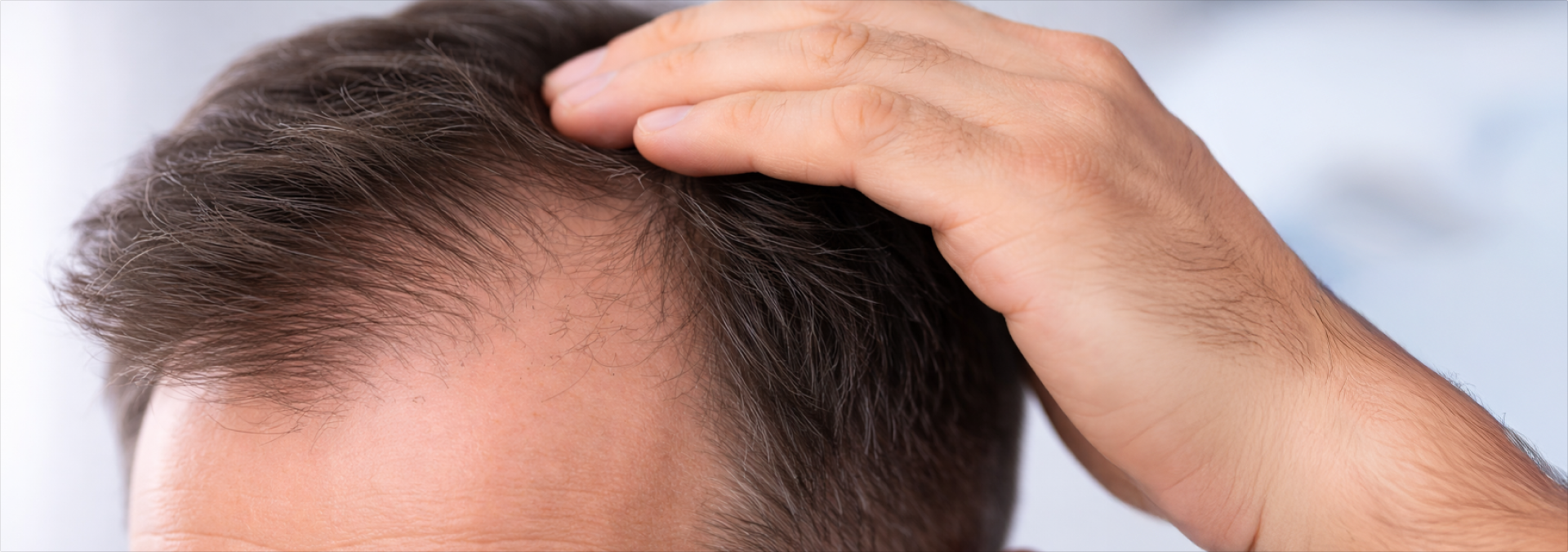
If you’re noticing thinning hair or a receding hairline, it’s tempting to blame stress, diet, or environmental factors. The reality is far less mysterious.
Hair loss in men is largely genetic.
“You can usually thank your parents and grandparents,” said Miguel Angel Pineda, M.D., director of male sexual dysfunction of urology at Staten Island University Hospital, part of Northwell Health. “Male-pattern baldness is hereditary.”
More specifically, androgenetic alopecia is driven by how your hair follicles respond to dihydrotestosterone, or DHT, a hormone derived from testosterone.
“When DHT binds to receptors in genetically susceptible hair follicles, it shortens the hair growth cycle,” said Robert Caruso, M.D., a urologist with RWJBarnabas Health. “Over time, that leads to thinning and hair loss.”
Where things get more complicated is when hair loss treatments intersect with sexual health.
Is hair loss linked to sexual dysfunction?
It’s common to assume that hair loss and sexual performance decline together. After all, both tend to become more noticeable with age.
But doctors emphasize that there is no direct relationship between hair loss itself and erectile dysfunction.
“In short, losing hair does not mean you’ll lose sexual function.”
“It’s coincidence, not causation,” Pineda said. “Men who are completely bald can have normal erections, and men with a full head of hair can experience erectile dysfunction.”
Ranjith Ramasamy, M.D., associate professor of urology at the University of Miami Miller School of Medicine and director of the andrology fellowship at the Desai Sethi Urology Institute, agrees.
“There’s no reason to think sexual dysfunction follows the onset of a receding hairline,” he said. “They don’t track together in a predictable way.”
"In short, losing hair does not mean you’ll lose sexual function."
The role of DHT in hair and sexual health
DHT is where the overlap between hair loss and sexual health often gets misunderstood.
DHT plays a role in male sexual development and is associated with libido and erectile function. A 2017 review in Endocrine Reviews noted that higher androgen activity is linked to increased sexual desire and function.
At the same time, higher DHT activity in genetically predisposed men accelerates scalp hair loss.
“DHT can be good for sexual function and bad for hair,” Pineda explained. “It depends on where and how it’s acting.”
That dual role is why treatments that reduce DHT can affect both hair and sexual health, even though the conditions themselves aren’t directly linked.

Other factors that can contribute to hair loss
While genetics are the primary driver of male-pattern baldness, they’re not the only factor that can affect hair health.
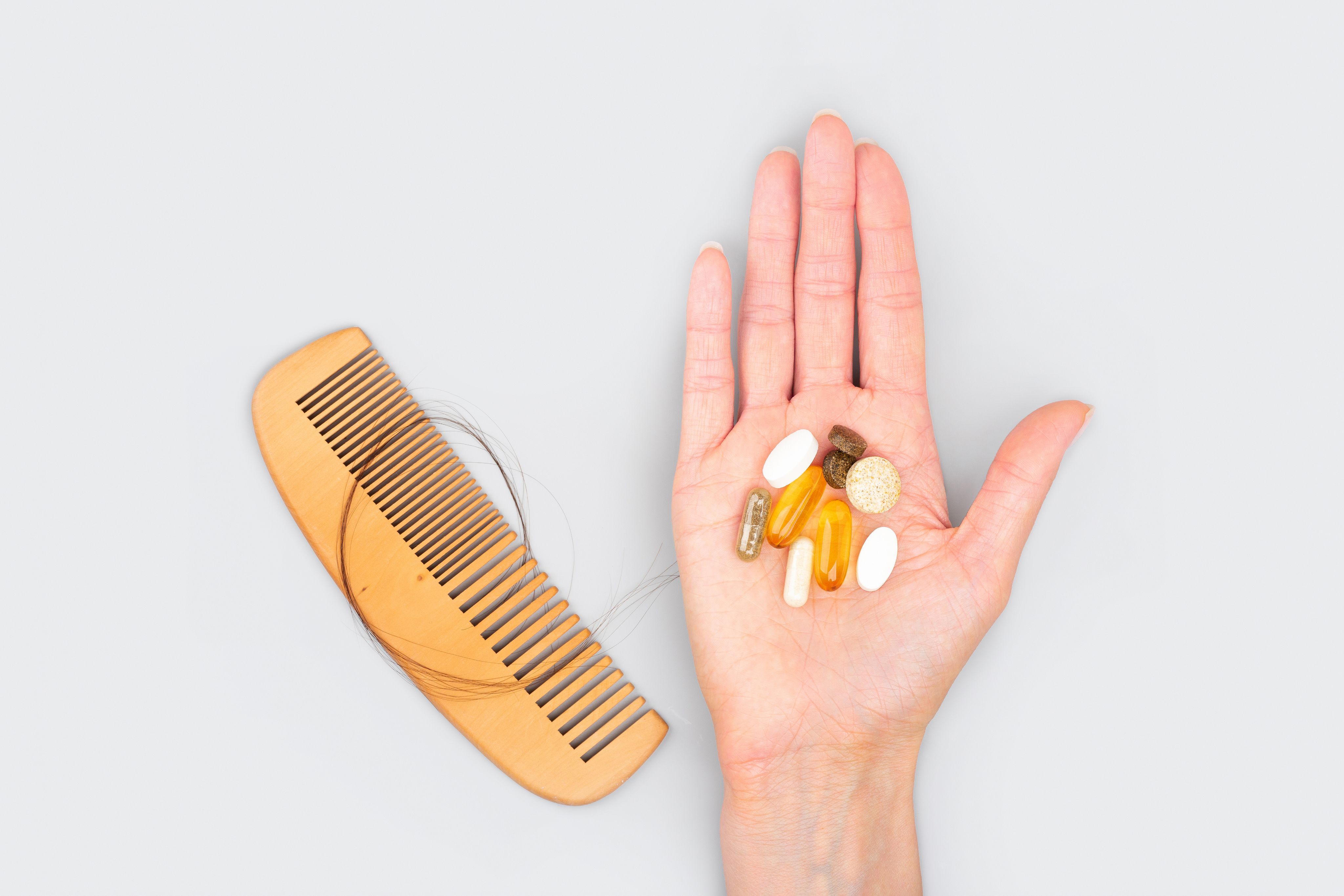
Ramasamy noted that hair loss can also be influenced by:

Many of these factors can also impact sexual function, which can make it harder to tease apart cause and effect.
Some observational research has explored environmental exposures, including endocrine-disrupting chemicals, but evidence remains limited and inconclusive. A 2020 review in the Journal of the American Academy of Dermatology noted possible associations between certain products and hair loss patterns, but emphasized the need for more research.
Hair loss treatments and sexual side effects
This is where the connection becomes more relevant.
The FDA has approved two primary treatments for androgenetic alopecia:
- Topical minoxidil, which stimulates hair growth and is not associated with sexual side effects
- Finasteride, an oral medication that reduces conversion of testosterone to DHT
Finasteride is effective for slowing hair loss, but it can affect sexual function in some men.
“Known side effects include decreased libido, erectile dysfunction, and ejaculatory changes,” Ramasamy said.
“Hair loss and sexual dysfunction are often discussed together, but they are not the same problem.”
For most men, these side effects resolve after stopping the medication. However, a small subset report persistent symptoms, sometimes referred to as post-finasteride syndrome, which can include ongoing sexual, physical, or psychological effects.
Because of this, doctors recommend discussing risks and benefits carefully before starting treatment.
Managing symptoms when both issues overlap
Men who experience sexual side effects while treating hair loss are not without options.
In some cases, adjusting dosage, discontinuing medication, or switching treatments can help. Others may benefit from addressing sexual symptoms directly with standard therapies, depending on the underlying cause.
Lifestyle factors also matter. Stress, sleep quality, physical activity, and overall cardiovascular health all influence sexual function and should be part of the conversation.
If libido changes are a concern, clinicians often recommend evaluating hormone levels and mental health alongside medication use rather than assuming a single cause.
When to talk to a doctor
Both hair loss and sexual dysfunction can have a meaningful impact on quality of life. They’re also common topics clinicians address every day.
“Even though patients may feel embarrassed, these are issues we’re trained to help with,” Ramasamy said. “There are often multiple treatment paths available.”
An open conversation allows a healthcare provider to assess:
- Whether symptoms are related to medication
- Whether other health conditions may be contributing
- What adjustments or alternatives may be appropriate
The Takeaway
Hair loss and sexual dysfunction are often discussed together, but they are not the same problem.
Hair loss is usually genetic. Sexual dysfunction is usually systemic. The overlap happens mainly through treatment choices, not biology alone.
Understanding that difference can help men make informed decisions, ask better questions, and avoid unnecessary worry.